


Moving to Thailand is exciting, but everyday life quickly teaches you that textbook Thai and real-life Thai are not always the same thing.
Ordering food or introducing yourself is one thing. Explaining that you’ve lost your passport, describing symptoms at a hospital, or asking what to do when public transportation is disrupted is something else entirely. These situations often happen unexpectedly, and staff may speak quickly or use vocabulary you have not practiced before.
The good news is that you do not need perfect Thai to handle everyday situations more confidently. Many interactions follow familiar patterns, and learning a few useful phrases in advance can make it much easier to understand what is happening and respond appropriately.
In this guide, you’ll learn 42 practical Thai phrases across six situations that residents and long-term visitors commonly face: the post office, medical appointments, customer service, police, emergencies, and transportation problems. Each section includes Thai script, romanization, English meanings, a short dialogue, and useful vocabulary.
Table of Contents
What Thai Phrases Do You Need for Daily Life in Thailand?
If you’re living in Thailand, or planning to move there, you do not need to memorize thousands of words before you can function confidently. It is more useful to learn phrases for the situations you are actually likely to encounter.
This guide focuses on:
- Sending letters and packages at the post office
- Visiting a doctor, clinic, or hospital
- Calling customer service
- Speaking with the police
- Handling emergencies
- Solving transportation problems
For a broader guide covering immigration, banking, healthcare, housing, utilities, and other parts of everyday life, see The Ultimate Thai Guide for Living in Thailand: 160+ Essential Phrases for Visa, Immigration, Moving & Daily Life.
Thai polite endings change according to the speaker. Male speakers commonly use ครับ (khráp), while female speakers commonly use ค่ะ (khâ) for statements and คะ (kha) for questions. In the phrases below, choose the ending appropriate for you rather than saying both.
At the Post Office: Sending Packages, Registered Mail, and Tracking Deliveries

Whether you’re mailing documents, sending a package abroad, buying stamps, or using registered mail, you’ll probably need Thailand Post at some point while living in Thailand.
For extra listening practice, ThaiPod101’s Posting a Package in Thailand lesson lets you hear a realistic package-sending conversation.
Common Situations
You may visit the post office to:
- Send a domestic package
- Send a parcel internationally
- Buy stamps
- Use registered mail
- Ask about tracking
- Ask about delivery times
Essential Thai Phrases
| Thai | Romanization | English |
|---|---|---|
| อยากส่งพัสดุครับ/ค่ะ | Yàak sòng phát-sà-dù khráp/khâ. | “I’d like to send a package.” |
| ส่งไปต่างประเทศครับ/ค่ะ | Sòng bpai dtàang-bprà-thêet khráp/khâ. | “It’s being sent abroad.” |
| ส่งพัสดุชิ้นนี้เท่าไหร่ครับ/คะ | Sòng phát-sà-dù chín níi thâo-rài khráp/kha? | “How much does it cost to send this package?” |
| เช็กสถานะพัสดุได้ไหมครับ/คะ | Chék sà-thǎa-ná phát-sà-dù dâai mái khráp/kha? | “Can I track the package?” |
| ขอซื้อแสตมป์หน่อยครับ/ค่ะ | Khɔ̌ɔ sʉ́ʉ sà-dtɛ̌ɛm nɔ̀i khráp/khâ. | “I’d like to buy some stamps.” |
| อยากส่งแบบลงทะเบียนครับ/ค่ะ | Yàak sòng bàep long thá-biian khráp/khâ. | “I’d like to send it by registered mail.” |
| ประมาณกี่วันถึงครับ/คะ | Bprà-maan gìi wan thʉ̌ng khráp/kha? | “About how many days will it take to arrive?” |
Sample Dialogue
Customer
อยากส่งพัสดุไปต่างประเทศครับ
Yàak sòng phát-sà-dù bpai dtàang-bprà-thêet khráp.
“I’d like to send a package abroad.”
Clerk
ต้องการแบบมีเลขติดตามไหมคะ
Dtɔ̂ng-gaan bàep mii lêek dtìt-dtaam mái kha?
“Would you like a service with tracking?”
Customer
ครับ เช็กสถานะพัสดุได้ไหมครับ
Khráp. Chék sà-thǎa-ná phát-sà-dù dâai mái khráp?
“Yes. Can I track the package?”
Clerk
ได้ค่ะ เดี๋ยวตรวจสอบบริการให้ค่ะ
Dâai khâ. Dǐao dtrùat-sɔ̀ɔp bɔɔ-rí-gaan hâi khâ.
“Yes. I’ll check the available service for you.”
Useful Vocabulary
| Thai | Romanization | English |
|---|---|---|
| ไปรษณีย์ | bprai-sà-nii | “post office / postal service” |
| พัสดุ | phát-sà-dù | “package / parcel” |
| แสตมป์ | sà-dtɛ̌ɛm | “stamp” |
| ค่าส่ง | khâa sòng | “shipping fee” |
| เลขติดตาม | lêek dtìt-dtaam | “tracking number” |
| ไปรษณีย์ลงทะเบียน | bprai-sà-nii long thá-biian | “registered mail” |
| ผู้รับ | phûu ráp | “recipient” |
For eligible services, you can check delivery status with Thailand Post’s official Track & Trace service.
Visiting a Doctor, Clinic, or Hospital

Nobody plans to get sick, but learning a few medical phrases before you need them can make a hospital or clinic visit much less stressful.
ThaiPod101’s Medical Assistance in Thai lesson provides extra practice with useful Thai for getting medical help.
Healthcare coverage in Thailand depends on your circumstances. Some foreign employees are covered through Social Security, while other residents may use different public or private insurance arrangements. If you have insurance, it is useful to ask whether a particular hospital or clinic accepts it.
Common Situations
At a medical appointment, you may need to:
- Say that it is your first visit
- Ask whether your insurance can be used
- Describe your symptoms
- Explain where you have pain
- Ask whether someone speaks English
- Find a pharmacy
Essential Thai Phrases
| Thai | Romanization | English |
|---|---|---|
| มาที่นี่ครั้งแรกครับ/ค่ะ | Maa thîi-nîi khráng râek khráp/khâ. | “This is my first visit here.” |
| ใช้ประกันนี้ได้ไหมครับ/คะ | Chái bprà-gan níi dâai mái khráp/kha? | “Can I use this insurance?” |
| มีไข้ครับ/ค่ะ | Mii khâi khráp/khâ. | “I have a fever.” |
| ปวดหัวครับ/ค่ะ | Bpùat hǔa khráp/khâ. | “I have a headache.” |
| ปวดท้องครับ/ค่ะ | Bpùat thɔ́ɔng khráp/khâ. | “My stomach hurts.” |
| มีใครพูดภาษาอังกฤษได้ไหมครับ/คะ | Mii khrai phûut phaa-sǎa ang-grìt dâai mái khráp/kha? | “Is there anyone who speaks English?” |
| ร้านขายยาใกล้ที่สุดอยู่ที่ไหนครับ/คะ | Ráan khǎai yaa glâi thîi-sùt yùu thîi-nǎi khráp/kha? | “Where is the nearest pharmacy?” |
Sample Dialogue
Receptionist
เคยมาที่นี่ไหมคะ
Khooei maa thîi-nîi mái kha?
“Have you been here before?”
Patient
ยังไม่เคยครับ มาครั้งแรกครับ
Yang mâi khooei khráp. Maa khráng râek khráp.
“No, I haven’t. This is my first visit.”
Receptionist
วันนี้เป็นอะไรคะ
Wan-níi bpen à-rai kha?
“What’s wrong today?”
Patient
มีไข้แล้วก็ปวดหัวครับ
Mii khâi lɛ́ɛo gɔ̂ɔ bpùat hǔa khráp.
“I have a fever and a headache.”
Useful Vocabulary
| Thai | Romanization | English |
|---|---|---|
| โรงพยาบาล | roong-phá-yaa-baan | “hospital” |
| คลินิก | khli-nìk | “clinic” |
| หมอ | mɔ̌ɔ | “doctor” |
| พยาบาล | phá-yaa-baan | “nurse” |
| อาการ | aa-gaan | “symptom / condition” |
| ใบสั่งยา | bai sàng yaa | “prescription” |
| ยา | yaa | “medicine” |
| ร้านขายยา | ráan khǎai yaa | “pharmacy” |
| ประกันสุขภาพ | bprà-gan sùk-khà-phâap | “health insurance” |
Helpful Phrases When You Don’t Understand
พูดอีกครั้งได้ไหมครับ/คะ
Phûut ìik khráng dâai mái khráp/kha?
“Could you say that again?”
ช่วยพูดช้าลงหน่อยได้ไหมครับ/คะ
Chûai phûut cháa long nɔ̀i dâai mái khráp/kha?
“Could you speak a little more slowly?”
For official background on healthcare access for foreign workers, see Thailand.go.th’s guidance on health services for foreign workers.
Calling Customer Service
Calling an internet provider, phone company, bank, utility company, insurer, or another service provider can feel intimidating if Thai is not your first language.
The good news is that these calls are usually structured. You may be asked for your name, phone number, customer number, address, or other account information before the representative can help.
For useful telephone language, see ThaiPod101’s On the Phone lesson.
Common Situations
You may need to contact customer service to:
- Report a service problem
- Ask about your account
- Change your plan
- Update your address
- Ask about a bill or charge
- Request technical support
Essential Thai Phrases
| Thai | Romanization | English |
|---|---|---|
| มีปัญหากับบริการครับ/ค่ะ | Mii bpan-hǎa gàp bɔɔ-rí-gaan khráp/khâ. | “I have a problem with the service.” |
| อินเทอร์เน็ตใช้ไม่ได้ครับ/ค่ะ | In-thəə-nét chái mâi dâai khráp/khâ. | “The internet isn’t working.” |
| อยากเปลี่ยนแพ็กเกจครับ/ค่ะ | Yàak bplìian phɛ́k-gèet khráp/khâ. | “I’d like to change my plan.” |
| อยากเปลี่ยนที่อยู่ครับ/ค่ะ | Yàak bplìian thîi-yùu khráp/khâ. | “I’d like to change my address.” |
| ช่วยอธิบายอีกครั้งได้ไหมครับ/คะ | Chûai à-thí-baai ìik khráng dâai mái khráp/kha? | “Could you explain that again?” |
| ช่วยพูดช้าลงหน่อยได้ไหมครับ/คะ | Chûai phûut cháa long nɔ̀i dâai mái khráp/kha? | “Could you speak a little more slowly?” |
| ขอคุยกับเจ้าหน้าที่ได้ไหมครับ/คะ | Khɔ̌ɔ khui gàp jâo-nâa-thîi dâai mái khráp/kha? | “Could I speak to a representative?” |
Sample Dialogue
Representative
สวัสดีค่ะ มีอะไรให้ช่วยคะ
Sà-wàt-dii khâ. Mii à-rai hâi chûai kha?
“Hello. How can I help you?”
Customer
อินเทอร์เน็ตใช้ไม่ได้ครับ
In-thəə-nét chái mâi dâai khráp.
“My internet isn’t working.”
Representative
ขอหมายเลขลูกค้าหน่อยค่ะ
Khɔ̌ɔ mǎai-lêek lûuk-kháa nɔ̀i khâ.
“May I have your customer number?”
Customer
ได้ครับ รอสักครู่นะครับ
Dâai khráp. Rɔɔ sàk khrûu ná khráp.
“Sure. One moment, please.”
Useful Vocabulary
| Thai | Romanization | English |
|---|---|---|
| บริการลูกค้า | bɔɔ-rí-gaan lûuk-kháa | “customer service” |
| เจ้าหน้าที่ | jâo-nâa-thîi | “staff member / representative” |
| สัญญา | sǎn-yaa | “contract” |
| แพ็กเกจ | phɛ́k-gèet | “plan / package” |
| ค่าบริการ | khâa bɔɔ-rí-gaan | “service charge” |
| ใบแจ้งหนี้ | bai jâeng nîi | “bill / invoice” |
| ขัดข้อง | khàt-khɔ̂ng | “malfunction / service problem” |
| หมายเลขลูกค้า | mǎai-lêek lûuk-kháa | “customer number” |
| ยกเลิก | yók-lə̂ək | “cancel” |
Going to the Police Station
Hopefully, you will not often need police assistance, but it is useful to know what to say if you lose important documents, have something stolen, need to make a report, or need immediate help.
For emergency-language practice, ThaiPod101’s Help! in Thai lesson covers asking for help and calling the police.
Common Situations
You may need the police to:
- Report a lost wallet or passport
- Report a stolen item
- File a police report
- Ask where to report lost property
- Ask for immediate help
- Ask whether someone speaks English
Essential Thai Phrases
| Thai | Romanization | English |
|---|---|---|
| ทำกระเป๋าสตางค์หายครับ/ค่ะ | Tham grà-bpǎo sà-dtaang hǎai khráp/khâ. | “I lost my wallet.” |
| ทำพาสปอร์ตหายครับ/ค่ะ | Tham phâat-sà-bpɔ̀ɔt hǎai khráp/khâ. | “I lost my passport.” |
| จักรยานถูกขโมยครับ/ค่ะ | Jàk-grà-yaan thùuk khà-mooi khráp/khâ. | “My bicycle was stolen.” |
| อยากแจ้งความครับ/ค่ะ | Yàak jâeng khwaam khráp/khâ. | “I’d like to file a police report.” |
| ช่วยด้วยครับ/ค่ะ | Chûai dûai khráp/khâ. | “Please help me.” |
| มีเจ้าหน้าที่ที่พูดภาษาอังกฤษได้ไหมครับ/คะ | Mii jâo-nâa-thîi thîi phûut phaa-sǎa ang-grìt dâai mái khráp/kha? | “Is there an officer who speaks English?” |
| ต้องไปแจ้งของหายที่ไหนครับ/คะ | Dtɔ̂ng bpai jâeng khɔ̌ɔng hǎai thîi-nǎi khráp/kha? | “Where do I report a lost item?” |
Sample Dialogue
Police Officer
เกิดอะไรขึ้นครับ
Gə̀ət à-rai khʉ̂n khráp?
“What happened?”
Resident
จักรยานถูกขโมยครับ อยากแจ้งความครับ
Jàk-grà-yaan thùuk khà-mooi khráp. Yàak jâeng khwaam khráp.
“My bicycle was stolen. I’d like to file a police report.”
Police Officer
หายที่ไหนครับ
Hǎai thîi-nǎi khráp?
“Where did it go missing?”
Resident
หน้าสถานีรถไฟครับ
Nâa sà-thǎa-nii rót-fai khráp.
“In front of the train station.”
Useful Vocabulary
| Thai | Romanization | English |
|---|---|---|
| ตำรวจ | dtam-rùuat | “police” |
| สถานีตำรวจ | sà-thǎa-nii dtam-rùuat | “police station” |
| ของหาย | khɔ̌ɔng hǎai | “lost property” |
| ขโมย | khà-mooi | “steal / thief” |
| แจ้งความ | jâeng khwaam | “file a police report” |
| กระเป๋าสตางค์ | grà-bpǎo sà-dtaang | “wallet” |
| พาสปอร์ต | phâat-sà-bpɔ̀ɔt | “passport” |
| บัตรประจำตัว | bàt bprà-jam-dtua | “identification card” |
Survival Tip
When you’re stressed, start with one clear sentence:
ทำพาสปอร์ตหายครับ/ค่ะ
Tham phâat-sà-bpɔ̀ɔt hǎai khráp/khâ.
“I lost my passport.”
โทรศัพท์ถูกขโมยครับ/ค่ะ
Thoo-rá-sàp thùuk khà-mooi khráp/khâ.
“My phone was stolen.”
ช่วยด้วยครับ/ค่ะ
Chûai dûai khráp/khâ.
“Please help me.”
Once the officer understands the situation, they can guide the conversation with follow-up questions.
Emergency Situations

Emergencies are stressful in any language. Whether you need urgent medical help, witness an accident, or discover a fire, clear communication matters much more than perfect grammar.
In Thailand, useful emergency numbers include:
- 191 = General emergency / police
- 1669 = Emergency medical services
- 199 = Fire and rescue
- 1155 = Tourist Police
ThaiPod101’s Essential Thai for Emergencies pathway provides additional practice for medical emergencies, calling the police, and other urgent situations.
Common Situations
You may need Thai if you:
- Need an ambulance
- Witness an accident
- Report a fire
- Need the police
- Cannot breathe
- Need to explain your location
Essential Thai Phrases
| Thai | Romanization | English |
|---|---|---|
| ช่วยด้วยครับ/ค่ะ | Chûai dûai khráp/khâ. | “Help!” |
| ช่วยเรียกรถพยาบาลให้หน่อยครับ/ค่ะ | Chûai rîiak rót phá-yaa-baan hâi nɔ̀i khráp/khâ. | “Please call an ambulance.” |
| มีไฟไหม้ครับ/ค่ะ | Mii fai mâi khráp/khâ. | “There’s a fire.” |
| เกิดอุบัติเหตุครับ/ค่ะ | Gə̀ət ù-bàt-dtì-hèet khráp/khâ. | “There’s been an accident.” |
| หายใจไม่ออกครับ/ค่ะ | Hǎai-jai mâi ɔ̀ɔk khráp/khâ. | “I can’t breathe.” |
| ช่วยเรียกตำรวจให้หน่อยครับ/ค่ะ | Chûai rîiak dtam-rùuat hâi nɔ̀i khráp/khâ. | “Call the police, please.” |
| อยู่หน้าสถานีรถไฟครับ/ค่ะ | Yùu nâa sà-thǎa-nii rót-fai khráp/khâ. | “I’m in front of the train station.” |
Sample Dialogue
Emergency Operator
1669 ค่ะ เกิดเหตุอะไรคะ
Nʉ̀ng-hòk-hòk-gâao khâ. Gə̀ət hèet à-rai kha?
“1669. What is the emergency?”
Caller
เกิดอุบัติเหตุครับ ช่วยส่งรถพยาบาลมาหน่อยครับ
Gə̀ət ù-bàt-dtì-hèet khráp. Chûai sòng rót phá-yaa-baan maa nɔ̀i khráp.
“There’s been an accident. Please send an ambulance.”
Operator
อยู่ที่ไหนคะ
Yùu thîi-nǎi kha?
“Where are you?”
Caller
อยู่หน้าสถานีรถไฟครับ
Yùu nâa sà-thǎa-nii rót-fai khráp.
“I’m in front of the train station.”
Useful Vocabulary
| Thai | Romanization | English |
|---|---|---|
| รถพยาบาล | rót phá-yaa-baan | “ambulance” |
| รถดับเพลิง | rót dàp phləəng | “fire truck” |
| ไฟไหม้ | fai mâi | “fire” |
| อุบัติเหตุ | ù-bàt-dtì-hèet | “accident” |
| บาดเจ็บ | bàat-jèp | “injured” |
| ห้องฉุกเฉิน | hɔ̂ng chùk-chə̌ən | “emergency room” |
| เหตุฉุกเฉิน | hèet chùk-chə̌ən | “emergency” |
If You Don’t Know Your Exact Location
Tell the operator the nearest:
- BTS, MRT, train, or bus station
- Convenience store
- Intersection
- Building
- Landmark
For current official hotline information, see Thailand.go.th’s emergency hotline information.
Transportation Problems
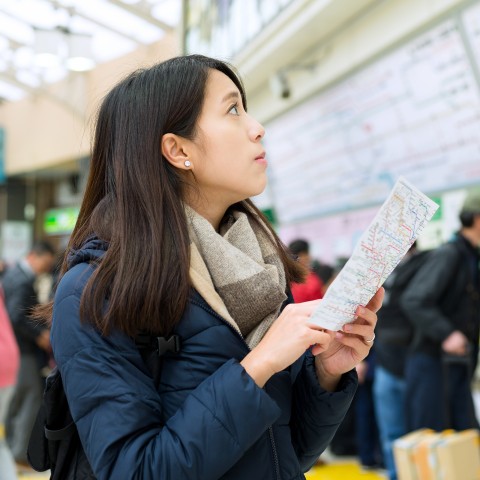
Public transportation in Thailand varies by location. Depending on where you live, you may use city buses, BTS or MRT systems, trains, vans, boats, or other local services.
For extra practice, ThaiPod101’s Taking the Bus in Thailand lesson covers useful language for getting around by bus.
Common Situations
You may need help when:
- A train or other service is delayed
- A train service is cancelled
- You need to confirm where a bus goes
- You need to find the correct platform
- You need to transfer
- You need another ticket
- You are unsure where to get off
Essential Thai Phrases
| Thai | Romanization | English |
|---|---|---|
| รถไฟล่าช้าไหมครับ/คะ | Rót-fai lâa-cháa mái khráp/kha? | “Is the train delayed?” |
| รถไฟเที่ยวนี้ยกเลิกไหมครับ/คะ | Rót-fai thîao níi yók-lə̂ək mái khráp/kha? | “Is this train cancelled?” |
| รถเมล์คันนี้ไปสยามไหมครับ/คะ | Rót-mee khan níi bpai Sà-yǎam mái khráp/kha? | “Does this bus go to Siam?” |
| ต้องไปชานชาลาไหนครับ/คะ | Dtɔ̂ng bpai chaan-chaa-laa nǎi khráp/kha? | “Which platform should I go to?” |
| ต้องต่อรถที่ไหนครับ/คะ | Dtɔ̂ng dtɔ̀ɔ rót thîi-nǎi khráp/kha? | “Where do I transfer?” |
| ซื้อตั๋วใหม่ได้ที่ไหนครับ/คะ | Sʉ́ʉ dtǔa mài dâai thîi-nǎi khráp/kha? | “Where can I buy another ticket?” |
| ต้องลงป้ายไหนครับ/คะ | Dtɔ̂ng long bpâai nǎi khráp/kha? | “Which stop should I get off at?” |
Sample Dialogue
Passenger
ขอโทษครับ รถเมล์คันนี้ไปสยามไหมครับ
Khɔ̌ɔ-thôot khráp. Rót-mee khan níi bpai Sà-yǎam mái khráp?
“Excuse me. Does this bus go to Siam?”
Driver
ไปครับ แต่ต้องต่อรถอีกครั้งครับ
Bpai khráp. Dtɛ̀ɛ dtɔ̂ng dtɔ̀ɔ rót ìik khráng khráp.
“Yes, but you need to transfer once.”
Passenger
ต้องต่อรถที่ไหนครับ
Dtɔ̂ng dtɔ̀ɔ rót thîi-nǎi khráp?
“Where do I transfer?”
Driver
ลงป้ายหน้าครับ
Long bpâai nâa khráp.
“Get off at the next stop.”
Useful Vocabulary
| Thai | Romanization | English |
|---|---|---|
| รถไฟ | rót-fai | “train” |
| รถเมล์ | rót-mee | “city bus” |
| รถไฟฟ้า | rót-fai-fáa | “urban electric rail / Skytrain” |
| รถไฟใต้ดิน | rót-fai dtâi din | “subway / metro” |
| สถานี | sà-thǎa-nii | “station” |
| ชานชาลา | chaan-chaa-laa | “platform” |
| ตั๋ว | dtǔa | “ticket” |
| ล่าช้า | lâa-cháa | “delayed” |
| ต่อรถ | dtɔ̀ɔ rót | “transfer / change vehicles” |
Essential Thai Cheat Sheet for Everyday Life
Need a quick refresher before heading out? Save this table to your phone or bookmark the page.
| Situation | Thai | Romanization | English |
|---|---|---|---|
| Post Office | อยากส่งพัสดุครับ/ค่ะ | Yàak sòng phát-sà-dù khráp/khâ. | “I’d like to send a package.” |
| Post Office | เช็กสถานะพัสดุได้ไหมครับ/คะ | Chék sà-thǎa-ná phát-sà-dù dâai mái khráp/kha? | “Can I track the package?” |
| Medical | มีไข้ครับ/ค่ะ | Mii khâi khráp/khâ. | “I have a fever.” |
| Medical | ปวดหัวครับ/ค่ะ | Bpùat hǔa khráp/khâ. | “I have a headache.” |
| Customer Service | อินเทอร์เน็ตใช้ไม่ได้ครับ/ค่ะ | In-thəə-nét chái mâi dâai khráp/khâ. | “The internet isn’t working.” |
| Customer Service | ช่วยพูดช้าลงหน่อยได้ไหมครับ/คะ | Chûai phûut cháa long nɔ̀i dâai mái khráp/kha? | “Could you speak a little more slowly?” |
| Police | อยากแจ้งความครับ/ค่ะ | Yàak jâeng khwaam khráp/khâ. | “I’d like to file a police report.” |
| Police | ช่วยด้วยครับ/ค่ะ | Chûai dûai khráp/khâ. | “Please help me.” |
| Emergency | ช่วยเรียกรถพยาบาลให้หน่อยครับ/ค่ะ | Chûai rîiak rót phá-yaa-baan hâi nɔ̀i khráp/khâ. | “Please call an ambulance.” |
| Emergency | ช่วยเรียกตำรวจให้หน่อยครับ/ค่ะ | Chûai rîiak dtam-rùuat hâi nɔ̀i khráp/khâ. | “Call the police, please.” |
| Transportation | ต้องต่อรถที่ไหนครับ/คะ | Dtɔ̂ng dtɔ̀ɔ rót thîi-nǎi khráp/kha? | “Where do I transfer?” |
| Transportation | ต้องลงป้ายไหนครับ/คะ | Dtɔ̂ng long bpâai nǎi khráp/kha? | “Which stop should I get off at?” |
How to Practice These Situations Before You Need Them
The best time to learn practical Thai is before you urgently need it.
Focus on Situations You’ll Actually Experience
Practice conversations you are likely to encounter as someone living in Thailand:
- Asking for help
- Describing symptoms
- Sending packages
- Reporting stolen or lost items
- Dealing with transportation problems
- Making phone calls
- Talking with customer service
Learn Through Complete Dialogues
Studying complete conversations helps you learn more than isolated words. Dialogues show you:
- Natural pronunciation
- Common sentence patterns
- Polite expressions
- Expected responses
- Vocabulary in context
- Conversational rhythm
Over time, you can start recognizing entire chunks of Thai instead of translating word by word.
A Simple Listening Practice Routine
- Listen once without reading.
- Read the transcript.
- Listen again.
- Repeat each sentence aloud.
- Role-play both speakers.
- Review the dialogue again a few days later.
Practice Real-Life Thai with ThaiPod101
The best way to prepare for life in Thailand is to practice the conversations you are most likely to have.
ThaiPod101 includes dialogue-based lessons, vocabulary practice, listening exercises, transcripts, and other resources for everyday communication. You can start with Level 1 Thai, the site’s Absolute Beginner pathway aligned with CEFR A1-A2, and move into more situation-specific material as your Thai improves.
For an additional collection centered on everyday life abroad, see the Living in Thailand pathway.
Whether you are preparing before your move or already living in Thailand, regular listening and speaking practice can make these situations feel much more familiar.
When you’re ready to keep building practical Thai through dialogues, vocabulary, and listening practice, start learning real-life Thai with ThaiPod101.
Frequently Asked Questions
Can I live in Thailand without speaking Thai?
It is possible to manage some situations with limited Thai, particularly in areas where English-speaking help is available. However, even a small amount of practical Thai can make medical appointments, transportation, customer service, and unexpected problems much easier to handle.
What level of Thai do I need to live comfortably in Thailand?
There is no single CEFR level that guarantees comfortable daily life. Real-life communication depends on listening speed, vocabulary, confidence, and the situations you encounter.
Even beginners can make daily life easier by learning practical phrases for the situations they face most often.
Do doctors and hospital staff in Thailand speak English?
Some hospitals, particularly larger private or international hospitals, have English-speaking staff or interpretation support. Availability varies by facility and location, so it is useful to know a few basic medical phrases and how to ask whether someone speaks English.
Do I need to use ครับ or ค่ะ?
In polite Thai, male speakers commonly use ครับ (khráp), while female speakers commonly use ค่ะ (khâ) for statements and คะ (kha) for questions.
These particles are especially useful when speaking with staff, doctors, police officers, customer-service representatives, and people you do not know.
Final Thoughts
Living in Thailand does not require perfect Thai. What matters is being able to communicate when you need help.
Whether you are sending a package, seeing a doctor, reporting a theft, calling customer service, handling an emergency, or dealing with a transportation problem, a few practical phrases can give you a clear way to begin the conversation.
Start with one situation. Practice a few phrases. Listen to a short dialogue. Then build from there. With repeated exposure, conversations that once felt intimidating can become much more manageable.
We’d Love to Hear From You
Which of these six situations would make you the most nervous in Thai?
- Visiting a doctor or hospital
- Going to the post office
- Talking to the police
- Calling customer service
- Handling an emergency
- Asking for help with transportation
Leave a comment below and let us know. We’ll recommend lessons and resources to help you feel more confident in that situation.