Handling money is one of the most practical parts of traveling in Thailand. You may need to ask a price, understand a spoken amount, check whether a shop takes cards, or ask for change or a receipt.
This guide gives you useful Thai currency vocabulary and payment phrases for real shopping situations, with Thai script, consistent romanization, and English throughout.
Table of Contents
Understanding Thai Baht and Common Prices
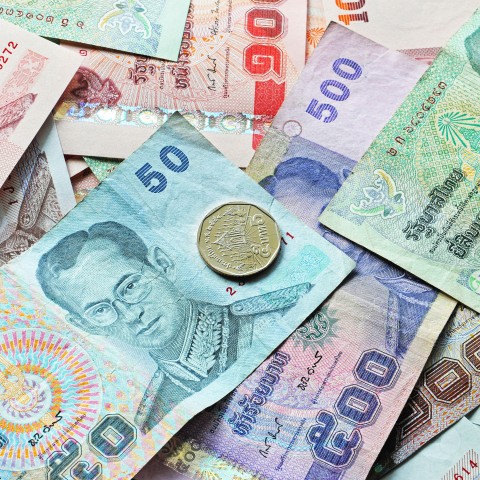
Thailand’s currency is the baht, บาท (bàat). One baht equals 100 satang, สตางค์ (sà-dtaang). You may still encounter satang in some prices or change, but travelers will often deal with whole-baht amounts.
Common circulating banknote denominations include 20, 50, 100, 500, and 1,000 baht.
Here are useful amounts to recognize:
| Amount | Thai | Romanization |
|---|---|---|
| 20 baht | ยี่สิบบาท | yîi-sìp bàat |
| 21 baht | ยี่สิบเอ็ดบาท | yîi-sìp-èt bàat |
| 50 baht | ห้าสิบบาท | hâa-sìp bàat |
| 100 baht | หนึ่งร้อยบาท | nùeng-ráauy bàat |
| 350 baht | สามร้อยห้าสิบบาท | sǎam-ráauy hâa-sìp bàat |
| 500 baht | ห้าร้อยบาท | hâa-ráauy bàat |
| 680 baht | หกร้อยแปดสิบบาท | hòk-ráauy bpàaet-sìp bàat |
| 1,000 baht | หนึ่งพันบาท | nùeng-phan bàat |
| 1,250 baht | หนึ่งพันสองร้อยห้าสิบบาท | nùeng-phan sǎawng-ráauy hâa-sìp bàat |
A few patterns make larger prices easier to decode:
- สิบ (sìp) means “ten.”
- ร้อย (ráauy) means “hundred.”
- พัน (phan) means “thousand.”
- Twenty is irregular: ยี่สิบ (yîi-sìp), not “two tens.”
- When 1 comes at the end of a number above 10, Thai normally uses เอ็ด (èt), as in ยี่สิบเอ็ด (yîi-sìp-èt), “twenty-one.”
For 100, you may hear either the full หนึ่งร้อย (nùeng-ráauy) or the shorter ร้อย (ráauy) in some contexts.
You will often see prices written with Arabic numerals such as 350 or 1,250, even though Thai numerals also exist. The useful skill is connecting the number you see with the Thai amount you hear.
For optional listening practice with money vocabulary, see Thai Currency on ThaiPod101.com.
Asking How Much Something Costs
The easiest way to ask a price is to point at an item and use one of these questions:
| Thai | Romanization | English |
|---|---|---|
| อันนี้เท่าไหร่ครับ/คะ | an-níi thâo-rài khráp/khá? | “How much is this?” |
| ราคาเท่าไหร่ครับ/คะ | raa-khaa thâo-rài khráp/khá? | “What’s the price?” |
| ขอโทษครับ/ค่ะ | khǎaw-thôot khráp/khâ | “Excuse me.” |
Thai polite particles vary with the speaker and the sentence. In polite situations, male speakers commonly use ครับ (khráp). Female speakers commonly use คะ (khá) in questions and ค่ะ (khâ) in statements. These particles are often omitted in casual speech among people who know each other well.
Here’s a simple market exchange:
Anna: ขอโทษค่ะ อันนี้เท่าไหร่คะ
Khǎaw-thôot khâ. An-níi thâo-rài khá?
“Excuse me. How much is this?”Vendor: หนึ่งร้อยบาทครับ
Nùeng-ráauy bàat khráp.
“One hundred baht.”Anna: ขอบคุณค่ะ
Khàawp-khun khâ.
“Thank you.”
Understanding a Price When It’s Spoken Quickly
If you do not catch the price the first time, ask the speaker to repeat it or slow down.
| Thai | Romanization | English |
|---|---|---|
| ช่วยพูดอีกครั้งได้ไหมครับ/คะ | chûuai phûut ìik khráng dâai mǎi khráp/khá? | “Could you say that again?” |
| ช่วยพูดช้าๆ ได้ไหมครับ/คะ | chûuai phûut cháa-cháa dâai mǎi khráp/khá? | “Could you speak more slowly?” |
Here’s how Leo handles a price he does not catch:
Leo: ขอโทษครับ ราคาเท่าไหร่ครับ
Khǎaw-thôot khráp. Raa-khaa thâo-rài khráp?
“Excuse me. What’s the price?”Vendor: สามร้อยห้าสิบบาทค่ะ
Sǎam-ráauy hâa-sìp bàat khâ.
“Three hundred fifty baht.”Leo: ขอโทษครับ ช่วยพูดอีกครั้งได้ไหมครับ
Khǎaw-thôot khráp. Chûuai phûut ìik khráng dâai mǎi khráp?
“Sorry, could you say that again?”Vendor: สามร้อยห้าสิบบาทค่ะ
Sǎam-ráauy hâa-sìp bàat khâ.
“Three hundred fifty baht.”Leo: อ๋อ เข้าใจแล้วครับ ขอบคุณครับ
Ǎaw, khâo-jai láaeo khráp. Khàawp-khun khráp.
“Oh, I understand now. Thank you.”
Cash or Card? Useful Payment Phrases
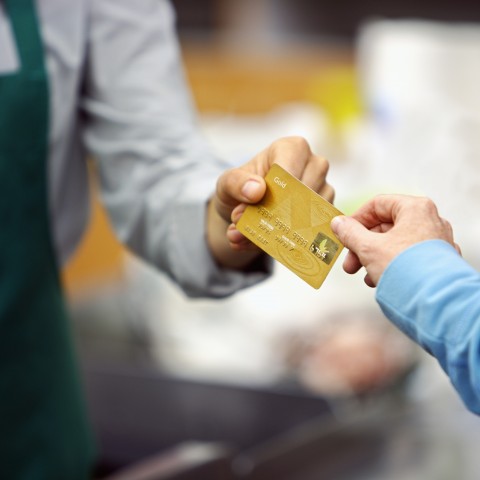
Payment options vary by business. Cards and QR scan payments are common in many places, while some vendors may have different payment options. International visitors may be able to use QR payments through supported banks, wallets, or tourist payment services, but availability depends on the service you use. Keeping some baht on hand is still useful, and these questions let you check before you pay.
| Thai | Romanization | English |
|---|---|---|
| รับบัตรเครดิตไหมครับ/คะ | ráp bàt-khree-dìt mǎi khráp/khá? | “Do you accept credit cards?” |
| ใช้บัตรเครดิตได้ไหมครับ/คะ | chái bàt-khree-dìt dâai mǎi khráp/khá? | “Can I use a credit card?” |
| สแกนจ่ายได้ไหมครับ/คะ | sà-gaen jàai dâai mǎi khráp/khá? | “Can I scan to pay?” / “Can I pay by QR code?” |
| จ่ายเงินสดได้ไหมครับ/คะ | jàai ngern-sòt dâai mǎi khráp/khá? | “Can I pay in cash?” |
Here’s a cash-only example:
Cashier: ทั้งหมดเก้าสิบบาทค่ะ
Tháng-mòt gâao-sìp bàat khâ.
“The total is ninety baht.”Anna: รับบัตรเครดิตไหมคะ
Ráp bàt-khree-dìt mǎi khá?
“Do you accept credit cards?”Cashier: ขอโทษค่ะ รับเฉพาะเงินสดค่ะ
Khǎaw-thôot khâ. Ráp chà-pháw ngern-sòt khâ.
“Sorry. We only accept cash.”Anna: ไม่เป็นไรค่ะ งั้นจ่ายเงินสดค่ะ
Mâi bpen rai khâ. Ngán jàai ngern-sòt khâ.
“No problem. Then I’ll pay in cash.”
Change, Receipts, and Other Checkout Phrases
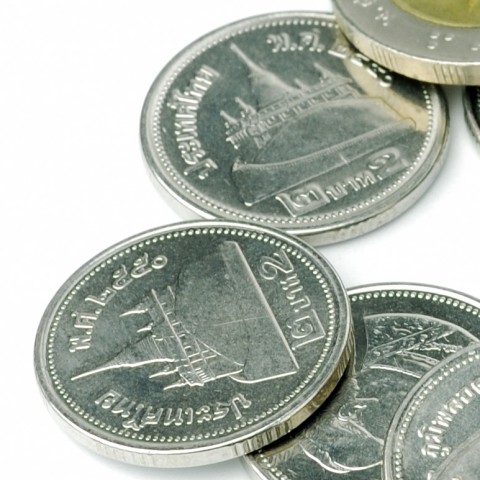
A few more phrases can help you finish a transaction smoothly.
| Thai | Romanization | English |
|---|---|---|
| เงินทอน | ngern-thaawn | “change” |
| มีเงินทอนไหมครับ/คะ | mii ngern-thaawn mǎi khráp/khá? | “Do you have change?” |
| ขอใบเสร็จได้ไหมครับ/คะ | khǎaw bai-sèt dâai mǎi khráp/khá? | “Can I have a receipt?” |
If you are paying for a small purchase with a large note, asking about change can be useful. In everyday Thai, a 1,000-baht note may also be called แบงก์พัน (báaeng phan).
Cashier: สามร้อยบาทครับ
Sǎam-ráauy bàat khráp.
“Three hundred baht.”Leo: (hands over a 1,000-baht note) มีเงินทอนไหมครับ
Mii ngern-thaawn mǎi khráp?
“Do you have change?”Cashier: มีครับ ทอนเจ็ดร้อยบาทครับ
Mii khráp. Thaawn jèt-ráauy bàat khráp.
“Yes. I’ll give you seven hundred baht in change.”Leo: ขอใบเสร็จได้ไหมครับ
Khǎaw bai-sèt dâai mǎi khráp?
“Can I have a receipt?”Cashier: ได้ครับ นี่ครับ
Dâai khráp. Nîi khráp.
“Sure. Here you go.”Leo: ขอบคุณครับ
Khàawp-khun khráp.
“Thank you.”
A Quick Note on Bargaining in Thailand
Bargaining may be acceptable at some markets and independent stalls, especially when prices are not fixed. It is generally not appropriate in convenience stores, malls, chain stores, or other clearly fixed-price settings.
If bargaining is appropriate, you can ask politely:
| Thai | Romanization | English |
|---|---|---|
| ลดหน่อยได้ไหมครับ/คะ | lót nàuy dâai mǎi khráp/khá? | “Could you lower the price a little?” |
For example:
Vendor: สามร้อยบาทครับ
Sǎam-ráauy bàat khráp.
“Three hundred baht.”You: ลดหน่อยได้ไหมครับ
Lót nàuy dâai mǎi khráp?
“Could you lower the price a little?”Vendor: ได้ครับ สองร้อยห้าสิบบาทครับ
Dâai khráp. Sǎawng-ráauy hâa-sìp bàat khráp.
“Sure. Two hundred fifty baht.”
Quick Self-Check
Try answering these without looking back:
- How would you ask, “How much is this?” and then ask the speaker to repeat the price more slowly?
- How would you say 680 baht and 1,250 baht in Thai?
- How would you ask whether a shop accepts credit cards, then ask whether you can pay in cash?
If you can answer those, you have a practical set of Thai phrases for asking prices, understanding amounts, and completing basic transactions.
For more shopping practice in context, continue with You Can Buy so Many Things for Only 19 Thai Baht! on ThaiPod101.com.