The capital of Thailand is Bangkok, but Thai people call it กรุงเทพฯ (grung-thêep), or Krung Thep. Golden temples, floating markets, sizzling street food, and a river full of boats make it one of the most exciting cities in Asia, and the perfect place to put your Thai to work.
In this guide, you’ll learn the difference between “Bangkok” and “Krung Thep,” discover must-see places like the Grand Palace and Wat Pho, follow a simple one-day itinerary, and pick up Thai phrases grouped by travel situation, with a quick guide to pronouncing them.
Capital of Thailand: Quick Answer
| Capital | Bangkok |
| Name in Thai | กรุงเทพฯ (grung-thêep), usually translated as “City of Angels” |
| Capital since | 1782 (founded by King Rama I) |
| Population | More than 10 million in the wider metropolitan area |
| River | Chao Phraya (แม่น้ำเจ้าพระยา) |
| Top sights | Grand Palace, Wat Pho, Wat Arun, Chatuchak, Chinatown |
“Bangkok” is the name foreigners use. In Thai, always say กรุงเทพฯ: grung (mid tone) + thêep (falling tone).
Table of Contents
- What Is the Capital of Thailand? Bangkok vs. Krung Thep
- The Grand Palace and Wat Phra Kaew
- Wat Pho and the Reclining Buddha
- Wat Arun and the Chao Phraya River
- Markets, Chinatown, and Street Food
- Getting Around Bangkok
- One Day in Bangkok: A Simple Itinerary
- Temple Etiquette in Bangkok
- Useful Thai Phrases for Exploring Bangkok
- Quiz: How Well Do You Know Bangkok?
- Bangkok FAQ
- Final Thoughts
1. What Is the Capital of Thailand? Bangkok vs. Krung Thep
The capital of Thailand is Bangkok. But here’s a fun fact: Thai people rarely call it “Bangkok.” In Thai, the city is กรุงเทพฯ (grung-thêep), which is usually translated as “City of Angels.”
That short name comes from a much longer one. Bangkok’s full ceremonial name has 168 letters when written in the Latin alphabet, and Guinness World Records lists it as the longest place name in the world. In everyday life, though, Thais just use the short form.
Bangkok became the capital in 1782. As our Culture File lesson explains, the capital was originally on the west bank of the Chao Phraya River, in what was then the city of Thonburi. When King Rama I came to the throne, he moved it across the river and gave it the long ceremonial name. Foreigners, meanwhile, had been calling the area “Bangkok” since the days of the Ayutthaya kingdom, and the name stuck.
Today, Bangkok is a huge, modern city, home to people from all over Thailand and the world: more than 10 million people live in and around the capital. Luckily for visitors, most of the famous sights are close together in the Old City, on Rattanakosin Island.
Want an overview of the city and its province? Listen to the lesson Bangkok Province on ThaiPod101.
2. The Grand Palace and Wat Phra Kaew

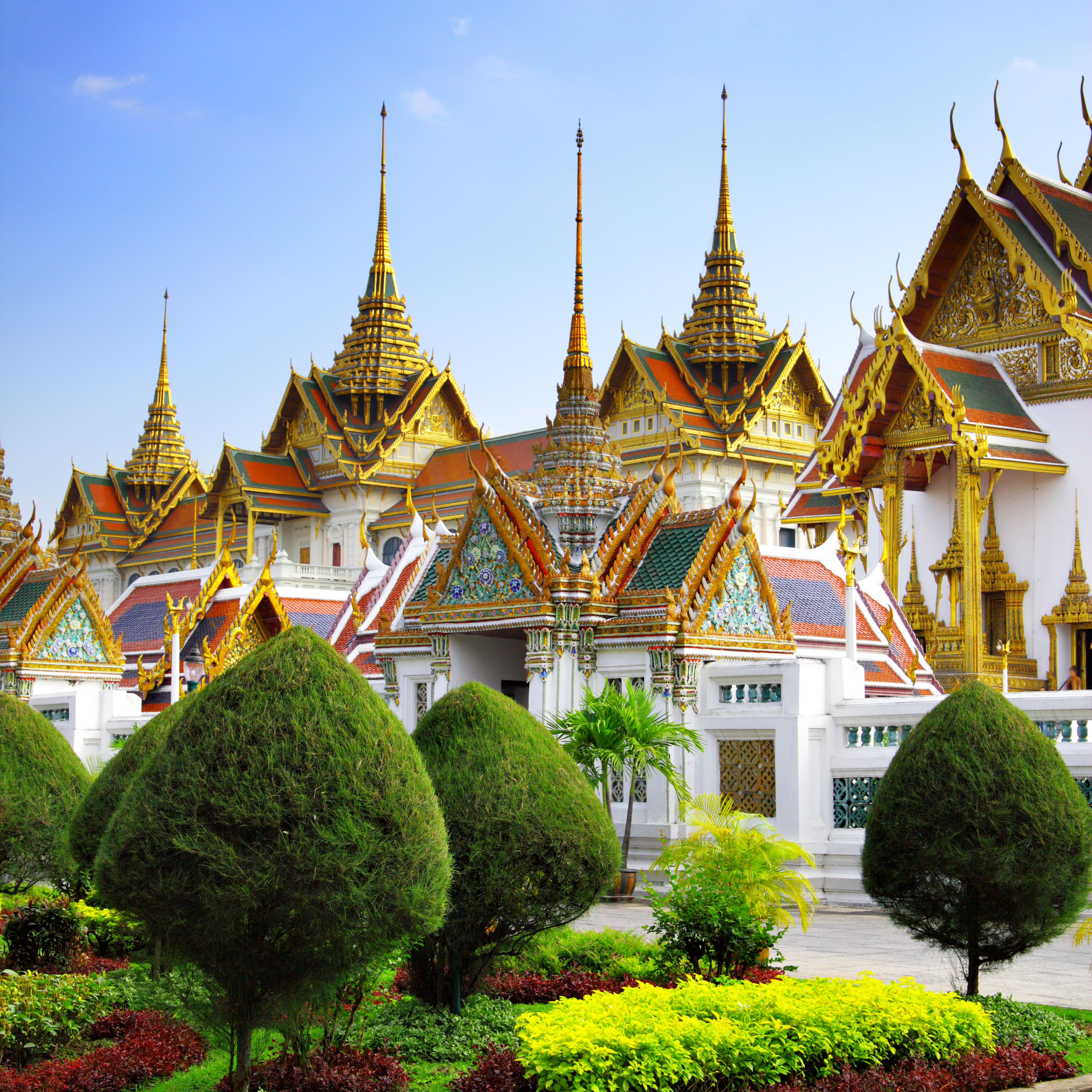
The Grand Palace, or พระบรมมหาราชวัง (phrá-baaw-rom-má-hǎa-râat-chá-wang), is Bangkok’s most famous landmark. Built from 1782 onward, it was the home of Thailand’s kings for generations. Today, it’s mainly used for royal and state ceremonies.
Inside the palace grounds is วัดพระแก้ว (wát phrá-gâaeo), the Temple of the Emerald Buddha. It houses the Emerald Buddha, the most sacred Buddha image in Thailand.
In our video lesson Top 10 Tourist Attractions in Thailand, host Jay introduces the Grand Palace, Wat Pho, and the famous floating markets, with example sentences you can use right away. For example: พรุ่งนี้ ฉันจะไปพระบรมมหาราชวัง (phrûng-níi chǎn jà bpai phrá-baaw-rom-má-hǎa-râat-chá-wang), “Tomorrow, I’ll go to the Grand Palace.” For more practice, try the beginner lesson Have You Seen Bangkok’s Grand Palace?
Tour Bangkok’s top sights with Jay
In the video lesson Top 10 Tourist Attractions in Thailand, ThaiPod101 host Jay introduces the Grand Palace, Wat Pho, the floating markets, and more, with Thai sentences you can use on your trip.
Watch Jay’s Video Lesson3. Wat Pho and the Reclining Buddha

Just south of the Grand Palace is วัดโพธิ์ (wát-phoo), one of the oldest and largest temples in Bangkok. Its star attraction is the Reclining Buddha: a gold-covered statue 46 meters long and 15 meters high, so big that you can only see it one section at a time.
Wat Pho is also famous as a center of traditional Thai massage. As Jay says in her video: วัดโพธิ์มีชื่อเสียงเรื่องการนวดไทย (wát-phoo mii chûue-sǐiang rûueang gaan nûuat thai), “Wat Pho is famous for Thai massage.”
Don’t forget to look at the Buddha’s feet. In our beginner lesson Have You Seen Bangkok’s Grand Palace?, host Ryan calls them the most interesting part: the soles are inlaid with mother-of-pearl showing 108 auspicious symbols. Along the length of the statue, you’ll find a row of 108 bowls where visitors drop coins to make merit. And there’s much more to see beyond the Reclining Buddha, or พระนอน (phrá-naawn) in Thai. Wat Pho has over 1,000 Buddha images, plus smaller halls and pagodas, so you could easily spend a whole morning there.
The same lesson teaches a handy pattern for travelers: ไป (bpai) + place + มาแล้ว (maa láaeo), meaning “I’ve already been to…” For example, ผมไปมาแล้วเมื่อวานครับ (phǒm bpai maa láaeo mûuea-waan khráp), “I already went yesterday.” Remember the word วัด (wát), too. It means “temple,” and you’ll see it at the start of temple names all over Bangkok. Go deeper with the advanced lesson An Important Thai Temple, Wat Pho.
4. Wat Arun and the Chao Phraya River

Across the river, on the Thonburi side, stands วัดอรุณ (wát à-run), the Temple of Dawn. The temple dates back to the Ayutthaya period. Its main tower is about 67 meters high and is surrounded by four smaller towers, all decorated with colorful pieces of Chinese porcelain. It looks especially beautiful at sunset.
The temple sits on the แม่น้ำเจ้าพระยา (mâae-náam jâo-phrá-yaa), the Chao Phraya River, which flows right through the city. For centuries, the river was Bangkok’s main road, and it’s still one of the best ways to see the city. From the pier near Wat Pho, a short cross-river ferry takes you to Wat Arun.

To travel along the river, hop on a Chao Phraya Express Boat. Lines are identified by the color of the flag on the boat, and they stop at piers near many of the city’s top sights. It’s cheap, fast, and a great way to escape the traffic.
5. Markets, Chinatown, and Street Food

Bangkok is a shopper’s paradise, and the word you need to know is ตลาด (dtà-làat), “market.”
- Chatuchak Weekend Market (ตลาดนัดจตุจักร (dtà-làat-nát jà-dtù-jàk)): One of the biggest markets in the world, with more than 15,000 stalls selling clothes, crafts, plants, antiques, and food. As the name suggests, it’s mainly open on weekends.
- Chinatown (เยาวราช (yao-wá-râat)): Yaowarat Road comes alive at night with neon signs and street food stalls. It’s one of the best places in the city to try Thai and Chinese-Thai dishes.
- Floating markets (ตลาดน้ำ (dtà-làat-náam)): At these markets, vendors sell fruit, snacks, and souvenirs from small boats. Many visitors take a day trip from Bangkok to see one.

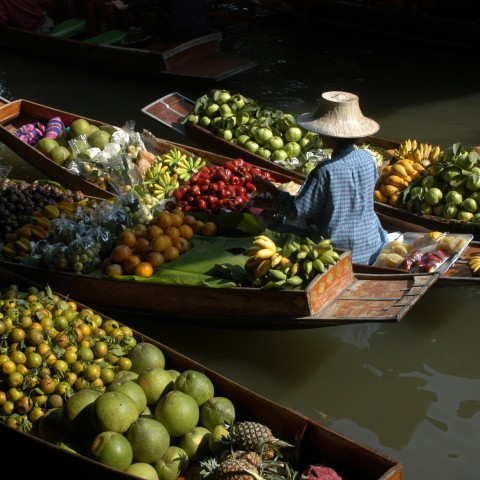
When you find something delicious, tell the vendor อร่อยมาก (à-ràauy mâak), “Very delicious!” Then practice shopping conversations with the lesson Where are We Going Shopping After This in Bangkok?
6. Getting Around Bangkok

Bangkok is famous for its traffic jams, so choosing the right transport can save you hours:
- BTS Skytrain and MRT: The elevated BTS Skytrain and the MRT subway are fast, air-conditioned, and easy to use. Thais often call the Skytrain รถไฟฟ้า (rót-fai-fáa), literally “electric train.”
- River boats: Perfect for the old city, the Grand Palace, Wat Pho, and Wat Arun.
- Taxis: Bangkok taxis use a meter, and you don’t need to tip, though small change is appreciated. To give your destination, just say ไป (bpai) (“go”) + the place + ครับ / ค่ะ (khráp / khâ). In our Survival Phrases lesson, for example, you’ll learn ไปจตุจักรครับ (bpai jà-dtù-jàk khráp), “To Chatuchak, please.” When you want to get out, say จอดตรงนี้ก็ได้ (jàawt dtrong níi gâaw dâai), “Here is fine.” Tip: ask your hotel to write your address in Thai, as place names can be hard to pronounce.
- Tuk-tuks (ตุ๊กตุ๊ก (dtúk-dtúk)): A fun, open-air ride for short trips. Agree on the price before you get in, and be careful if a driver says a famous sight is “closed today” and offers to take you somewhere else instead.
Learn the key phrases for your first ride with the lesson Taking a Thai Taxi.
7. One Day in Bangkok: A Simple Itinerary
Only have one day? The Old City sights are close together, so you can see the highlights on foot and by boat.
| When | Where | Thai to try |
|---|---|---|
| Morning | Grand Palace and Wat Phra Kaew. Go early to beat the heat and the crowds. | ไปพระบรมมหาราชวังครับ / ค่ะ (bpai phrá-baaw-rom-má-hǎa-râat-chá-wang khráp / khâ), “To the Grand Palace, please.” |
| Late morning | Wat Pho. See the Reclining Buddha, then rest with a traditional Thai massage. | ไปวัดโพธิ์มาแล้ว (bpai wát-phoo maa láaeo), “I’ve already been to Wat Pho.” |
| Afternoon | Wat Arun. Take the short ferry across the Chao Phraya River. | สวยมาก (sǔuai mâak), “Very beautiful!” |
| Evening | Chinatown (Yaowarat). Eat your way along the street food stalls. | ไม่เผ็ด (mâi phèt), “Not spicy.” |
| Weekend option | Chatuchak Weekend Market. Take the BTS or MRT. | อันนี้เท่าไหร่ (an-níi thâo-rài), “How much is this?” |
Check before you go
Opening hours, ticket prices, dress codes, and transport routes can change, and some sights close for royal ceremonies. Check the official websites of the Grand Palace, temples, and transport operators shortly before your trip.
8. Temple Etiquette in Bangkok

Bangkok’s temples are active places of worship, so a little respect goes a long way:
- Cover up: At the Grand Palace, Wat Pho, and most temples, cover your shoulders and knees. Our Culture File lesson lists what isn’t allowed at the Grand Palace, including shorts, short skirts, tights, see-through tops, sleeveless shirts, and sandals without a heel or ankle strap. You also can’t roll up your sleeves. If you’re not dressed correctly, staff can provide suitable clothes for a fee.
- Shoes off: Take off your shoes before entering a temple building.
- Be careful with your feet: When sitting, don’t point the soles of your feet toward a Buddha image or a person.
- Greet with a wai: Press your palms together and bow slightly as you say สวัสดีครับ / ค่ะ (sà-wàt-dii khráp / khâ).
For a full guide, read our post Visiting a Temple in Thailand: Etiquette and Useful Thai Phrases.
9. Useful Thai Phrases for Exploring Bangkok
Here are useful Thai phrases for exploring Bangkok, grouped by situation. Men add ครับ (khráp) and women add ค่ะ (khâ) at the end of a sentence to sound polite.
How to read the romanization
| Mark | Tone | Example |
|---|---|---|
| No mark | mid tone | bpai (go) |
| à | low tone | dtà-làat (market) |
| â | falling tone | mâak (very) |
| á | high tone | khráp (polite particle) |
| ǎ | rising tone | mǎi (question word) |
bp and dt are unaspirated sounds between “b/p” and “d/t,” with no puff of air. Doubled vowels, like aa in mâak, are held longer. Listen to native audio to get the tones right.
Greetings and Politeness
| Thai | Romanization | English |
|---|---|---|
| สวัสดีครับ / ค่ะ | sà-wàt-dii khráp / khâ | Hello |
| ขอบคุณครับ / ค่ะ | khàawp-khun khráp / khâ | Thank you |
| ขอโทษครับ / ค่ะ | khǎaw-thôot khráp / khâ | Excuse me. / Sorry. |
| ไม่เป็นไร | mâi bpen rai | No problem. / Never mind. |
Shopping and Markets
| Thai | Romanization | English |
|---|---|---|
| อันนี้เท่าไหร่ | an-níi thâo-rài | How much is this? |
| ลดได้ไหม | lót dâi mǎi | Can you give a discount? |
| เอาอันนี้ | ao an-níi | I’ll take this one. |
Taxis and Getting Around
| Thai | Romanization | English |
|---|---|---|
| ไปที่…ครับ / ค่ะ | bpai thîi… khráp / khâ | To …, please. (to a driver) |
| จอดตรงนี้ก็ได้ | jàawt dtrong níi gâaw dâai | Here is fine. (to a driver) |
| ไป…มาแล้ว | bpai… maa láaeo | I’ve already been to … |
| กรุงเทพฯ | grung-thêep | Bangkok |
Food and Restaurants
| Thai | Romanization | English |
|---|---|---|
| ไม่เผ็ด | mâi phèt | Not spicy |
| อร่อยมาก | à-ràauy mâak | Very delicious! |
| เช็คบิลด้วยครับ / ค่ะ | chék bin dûuai khráp / khâ | Check, please. |
Restrooms and Help
| Thai | Romanization | English |
|---|---|---|
| ห้องน้ำอยู่ที่ไหน | hâawng-náam yùu thîi-nǎi | Where is the restroom? |
| พูดภาษาอังกฤษได้ไหม | phûut phaa-sǎa ang-grìt dâi mǎi | Can you speak English? |
10. Quiz: How Well Do You Know Bangkok?
Test what you’ve learned about the capital of Thailand. Tap an answer to see if you’re right.
Question 1. What do Thai people usually call Bangkok?
Question 2. You want to tell a taxi driver “Here is fine.” What do you say?
Question 3. Which temple is famous for the Reclining Buddha and Thai massage?
Question 4. In the romanization mâak, what does the mark on â show?
11. Bangkok FAQ
What is the capital of Thailand?
The capital of Thailand is Bangkok. In Thai, it’s called กรุงเทพฯ (grung-thêep), or Krung Thep Maha Nakhon in its longer official form.
Why do Thais call Bangkok “Krung Thep”?
“Krung Thep” is the short form of the city’s very long ceremonial name. It’s usually translated as “City of Angels.” The name “Bangkok” comes from the name of the original riverside village and is mainly used by foreigners.
When did Bangkok become the capital of Thailand?
Bangkok became the capital in 1782, when King Rama I founded the new capital on the east bank of the Chao Phraya River.
What should I wear to the Grand Palace?
Wear clothes that cover your shoulders and knees. Shorts, sleeveless tops, and see-through clothing are not allowed.
What is the best way to get around Bangkok?
For most trips, the BTS Skytrain and MRT are the fastest way to avoid traffic. For the old city and riverside temples, the Chao Phraya Express Boat is a great choice.
12. Final Thoughts
From the golden roofs of the Grand Palace to the neon lights of Chinatown, the capital of Thailand has something for every traveler. And with a few Thai phrases, you’ll find that people are even friendlier and your trip is even more fun.
Planning a longer trip? Explore more places in our Bangkok Travel Guide, practice your first ride with Taking a Thai Taxi, and find lessons for every level on ThaiPod101.
See Bangkok’s top sights before you go
Watch Jay’s video lesson Top 10 Tourist Attractions in Thailand and learn the Thai you’ll use at each stop.
Watch the Video LessonHave you been to Bangkok? What was your favorite place? Tell us in the comments!