

In English, there are adjectives and adverbs, two types of words that have different roles in a sentence. However, in Thai, there is a type of word called คำวิเศษณ์ (kham-wí-sèet), which is an overlapping group of words between adjectives and adverbs. คำวิเศษณ์ (kham-wí-sèet) modifies nouns, pronouns, verbs, adjectives, and adverbs. Thai categorizes it into ten types, which are explained in detail in the following sections.
Overall, you’ll learn about Thai adjectives and adverbs. Let’s start with the first type!
1. ลักษณวิเศษณ์
ลักษณวิเศษณ์ (lák-sà-nà-wí-sèet) tells the characteristics of a noun, such as color, size, shape, odor, taste, feeling, and so on. Basically, this is the same as adjectives in the English language.
ลักษณวิเศษณ์ (lák-sà-nà-wí-sèet) comes from ลักษณะ (lák-sà-nà) and วิเศษณ์ (wí-sèet) mixed together. ลักษณะ (lák-sà-nà) means “quality” in Thai.
How to use: Noun + ลักษณวิเศษณ์ (lák-sà-nà-wí-sèet)

Example 1:
- น้ำตาลชอบดอกไม้สีแดง
- nám-dtaan-châawp-dàawk-mái-sǐi-daaeng
- “Namtan likes red flowers.”
Example 2:
- กระเป๋าใบใหญ่นั่นราคาเท่าไหร่
- grà-bpǎo-bai-yài-nân-raa-khaa-thâo-rài
- “How much is that big bag?”
Example 3:
- ขนมกล้วยกลิ่นหอมมาก
- khà-nǒm-glûuai-glìn-hǎawm-mâak
- “The banana dessert smells really good.”
Example 4:
- มะละกอลูกนี้รสหวานฉ่ำ
- má-lá-gaaw-lûuk-níi-rót-wǎan-chàm
- “This papaya is sweet and juicy.”
Example 5:
- แม่ชอบดื่มชาอุ่น ๆ
- mâae-châawp-dùuem-chaa-ùn-ùn
- “Mom likes to drink warm tea.”
There are many ลักษณวิเศษณ์ (lák-sà-nà-wí-sèet) you should know. You find it easier to communicate; for example, you can use these adjectives to describe Thai food or explain the color of clothes. So, you should learn these basic Thai adjectives and adverbs as well.
2. กาลวิเศษณ์
กาลวิเศษณ์ (gaan-wí-sèet) tells time in Thai, such as a period of time in a day, future, past, and so on. Basically, these are Thai adverbs of time.
กาลวิเศษณ์ (gaan-wí-sèet) comes from กาล (gaan) and วิเศษณ์ (wí-sèet) mixed together. กาล (gaan) means “time” in Thai.
How to use: There is no clear structure of how to use กาลวิเศษณ์ (gaan-wí-sèet); it depends on each word.

Example 1:
- ตั้มออกกำลังกายตอนเช้าทุกวัน
- dtûm-àawk-gam-lang-gaai-dtaawn-cháo-thúk-wan
- “Tum exercises every morning.”
Example 2:
- ปาริศจะไปภูเก็ตวันพรุ่งนี้
- bpaa-rít-jà-bpai-phuu-khèt-wan-phrûng-níi)
- “Parit will go to Phuket tomorrow.”
Example 3:
- เมื่อก่อนนี้ แถวนี้อากาศดีมาก
- mûuea-gàawn-níi thǎao-níi-aa-gàat-dii-mâak
- “In the past, the weather was really good in this area.”
Example 4:
- ในอนาคตอันใกล้ หน้าร้อนจะต้องร้อนมากแน่ ๆ
- nai-à-naa-khót-an-glâi nâa-ráawn-jà-dtâawng-ráawn-mâak-nâae-nâae
- “In the near future, it will be extremely hot in the summer.”
Example 5:
- รัตนาจะออกไปข้างนอกตอนสาย ๆ
- rát-dtà-naa-jà-aawk-bpai-khâang-nâawk-dtaawn-sǎai-sǎai
- “Rattana will go out in the late morning.”
3. สถานวิเศษณ์
สถานวิเศษณ์ (sà-thǎan-wí-sèet) tells location in Thai, such as direction, position, near, far, and so on. These are basically Thai adverbs of place.
สถานวิเศษณ์ (sà-thǎan-wí-sèet) comes from สถาน (sà-thǎan) and วิเศษณ์ (wí-sèet) mixed together. สถาน (sà-thǎan) means “place or site” in Thai.
How to use: There is no clear structure of how to use สถานวิเศษณ์ (sà-thǎan-wí-sèet); it depends on each word.
Example 1:
- บ้านของฉันอยู่ใกล้ที่ทำงานมาก
- bâan-khǎawng-chǎn-yùu-glâi-thîi-tham-ngaan-mâak
- “My house is very close to the office.”
Example 2:
- มุ่งหน้าไปทางทิศใต้
- mûng-nâa-bpai-thaang-thít-dtâi
- “Head south.”
Example 3:
- หนังสือวางอยู่ข้างบนโต๊ะ
- nǎng-sǔue-waang-yùu-khâang-bon-dtóe
- “The book is on the table.”
Example 4:
- ใครยืนอยู่ข้างซ้ายของเธอ
- khrai-yuuen-yùu-khâang-sáai-khǎawng-thooe
- “Who is standing on your left?”
Example 5:
- ตาลนั่งดูคอนเสิร์ตอยู่แถวหน้าสุด
- dtaan-nâng-duu-khaawn-sòoet-yùu-thǎaeo-nâa-sùt
- “Tarn is watching the concert in the front row.”
4. นิยมวิเศษณ์
นิยมวิเศษณ์ (ní-yá-má-wí-sèet) makes definite nouns in Thai. This is similar to “this + noun” and “that + noun” in the English language.
How to use: Place นิยมวิเศษณ์ (ní-yá-má-wí-sèet) after a noun and its numeric classifier (if any) to make it a definite noun.

Example 1:
- รถคันนี้ราคาแพงมาก
- rót-khan-níi-raa-khaa-phaaeng-mâak
- “This car is very expensive.”
Example 2:
- ห้องประชุมห้องนู้นว่างรึเปล่า
- hâawng-bprà-chum-hâawng-núun-wâang-rúe-bplào
- “Is that meeting room available?”
Example 3:
- ฉันจะเอากางเกงตัวนั้น
- chǎn-ja-ao-gaang-geeng-dtuua-nán
- “I want those pants.”
Example 4:
- ห้องโน้นคือห้องอะไร
- hâawng-nóon-khuue-hâawng-à-rai
- “What room is that room?”
Example 5:
- แตงโมนี่ราคาเท่าไหร่
- dtaaeng-moo-nîi-raa-khaa-thâo-rài
- “How much is this watermelon?”
This part is a little bit confusing as each word sounds pretty much the same, so you have to be careful. You learn the meaning of each word in our pronouns article.
5. อนิยมวิเศษณ์
อนิยมวิเศษณ์ (à-ní-yá-má-wí-sèet) makes indefinite nouns in Thai. This is similar to “any + noun” in the English language.
How to use: Noun + อนิยมวิเศษณ์ (à-ní-yá-má-wí-sèet) + ก็ได้ (gâaw-dâi)
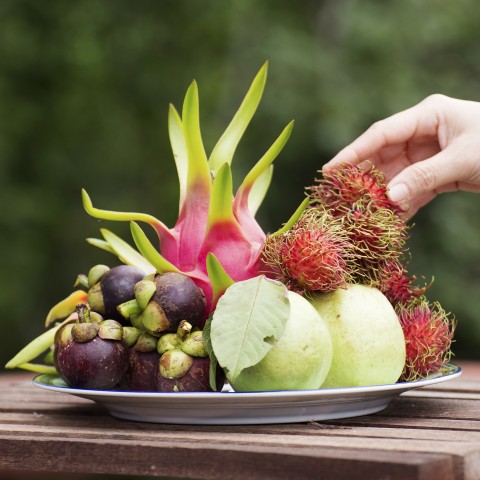
Example 1:
- ช่วยซื้อผลไม้อะไรมาก็ได้ซัก 2 กิโล
- chûuai-súue-phǒn-lá-mái-à-rai-maa-gâaw-dâi-sák-sǎawng-gì-loo
- “Please buy two kilograms of any fruit.”
Example 2:
- ครูบอกว่าจะวางเอกสารไว้ที่โต๊ะตัวไหนก็ได้
- khruu-bàawk-wâa-jà-waang-èek-gà-sǎan-wái-thîi-dtóe-dtuua-nǎi-gâaw-dâi
- “The teacher said I can put the document on any table.”
Example 3:
- นักเรียนต้องส่งงานภายในวันนี้ แต่เวลาใดก็ได้
- nák-riian-dtâawng-sòng-ngaan-phaai-nai-wan-níi dtàae-wee-laa-dai-gâaw-dái
- “The student has to submit the report today, but at any time.”
Example 4:
- ฉันทำงานกับใครก็ได้
- chǎn-tham-ngaan-gàp-khrai-gâaw-dâi
- “I can work with anybody.”
Example 5:
- สมาชิกคนอื่น ๆ ก็ทำได้
- sà-maa-chík-khon-ùuen-ùuen-gâaw-tham-dâi
- “Any member can do this.”
6. ปฤจฉาวิเศษณ์
ปฤจฉาวิเศษณ์ (bprùt-chǎa-wí-sèet) makes questions in Thai. Basically, it is a question word in the English language.
ปฤจฉาวิเศษณ์ (bprùt-chǎa-wí-sèet) comes from ปฤจฉา (bprùt-chǎa) and วิเศษณ์ (wí-sèet) mixed together. ปฤจฉา (bprùt-chǎa) means “question” in Thai.
How to use: There is no clear structure of which part of the sentence ปฤจฉาวิเศษณ์ (bprùt-chǎa-wí-sèet) should be in; it depends on each case.

Example 1:
- เธอชอบหนังสืออะไรมากที่สุด
- thooe-châawp-nǎng-sǔue-à-rai-mâak-thîi-sùt
- “Which book do you like the most?”
Example 2:
- โรงพยาบาลอยู่ที่ไหน
- roong-phá-yaa-baan-yùu-thîi-nǎi
- “Where is the hospital?”
Example 3:
- ทำไมเธอมาสาย
- tham-mai-thooe-maa-sǎai
- “Why are you late?“
Example 4:
- เธอจะไปชลบุรีกับใคร
- thooe-jà-bpai-chon-bù-rii-glàp-khrai
- “Who are you going to Chonburi with?”
Example 5:
- งานเลี้ยงจะเริ่มเมื่อไหร่
- ngaan-líiang-jà-rôoem-mûuea-rài
- “When will the party begin?”
7. ประพันธวิเศษณ์
ประพันธวิเศษณ์ (bprà-phan-thá-wí-sèet) acts as a linking word in a sentence with a relative clause in Thai.
ประพันธวิเศษณ์ (bprà-phan-thá-wí-sèet) comes from ประพันธ์ (bprà-phan) and วิเศษณ์ (wí-sèet). ประพันธ์ (bprà-phan) means “compose” or “relate” in Thai, while วิเศษณ์ (wí-sèet) comes from คำวิเศษณ์ (kham-wí-sèet).
How to use: Place ประพันธวิเศษณ์ (bprà-phan-thá-wí-sèet) after a word that is in both sentences.
Example 1:
- แม่ชอบกินอาหารที่อุ่น ๆ
- maae-chaawp-gin-aa-haan-thii-un-un
- “Mom likes to eat food that is warm.”
This sentence comes from two sentences, which are “Mom likes to eat food,” and “The food is warm.” Thus, ที่ (thîi) is placed after food.
Example 2:
- น้องชอบของเล่นอันที่อยู่บนโต๊ะ
- náawng-châawp-khǎawng-lên-an-thîi-yùu-bon-dtóe
- “My sister likes the toy that is on the table.”
This sentence comes from two sentences, which are “My sister likes the toy,” and “The toy is on the table.” Thus, place อัน (an) after toy.
Example 3:
- ฉันตั้งใจเรียนอย่างที่แม่หวัง
- chǎn-dtâng-jai-riian-yàang-thîi-mâae-wǎng
- “I study hard as my mother wishes.”
This sentence comes from two sentences, which are “I study hard,” and “Mom wishes I study hard.” Thus, place อย่างที่ (yàang-thîi) after study hard.
Example 4:
- เธอชอบกระเป๋าซึ่งมีราคาแพง
- thooe-châawp-grà-bpǎo-sûeng-mii-raa-khaa-phaaeng
- “She likes bags which are expensive.”
This sentence comes from two sentences, which are “She likes bags,” and “The bags are expensive.” Thus, place ซึ่ง (sûeng) after bags.
Example 5:
- ฉันจะทำดังที่เธอสั่ง
- chǎn-jà-tham-dang-thîi-thooe-sàng
- “I will do as you ordered.”
This sentence comes from two sentences, which are “I will do it,” and “You ordered me to do it.” Thus, place ดังที่ (dang-thîi) after do.
8. ประมาณวิเศษณ์
ประมาณวิเศษณ์ (bprà-maan-wí-sèet) tells the amount or quantity in Thai. Basically, they are Thai numbers and Thai language adverbs of degree.
ประมาณวิเศษณ์ (bprà-maan-wí-sèet) comes from ประมาณ (bprà-maan) and วิเศษณ์ (wí-sèet) mixed together. ประมาณ (bprà-maan) means “estimate” in Thai, while วิเศษณ์ (wí-sèet) comes from คำวิเศษณ์ (kham-wí-sèet).
How to use: There is no clear structure of how to use ประมาณวิเศษณ์ (bprà-maan-wí-sèet); it depends on each word.

Example 1:
- ยายซื้อผักมาจากตลาดเยอะมาก
- yaai-súue-phàk-maa-jàak-dtà-làat-yóe-mâak
- “Grandma buys a lot of vegetables from the market.”
Example 2:
- แก้มมีเงินในกระเป๋านิดเดียว
- gâaem-mii-ngooen-nai-grà-bpǎo-nít-diiao
- “Gam has little money in the bag.”
Example 3:
- อั้มมีรถ 2 คัน
- âm-mii-rót-sǎawng-khan
- “Aum has two cars.”
Example 4:
- รดาอ่านหนังสือหลายประเภท
- rá-daa-àan-nǎng-sǔue-lǎai-bprà-phêet
- “Rada reads various types of books.”
Example 5:
- ภัทรออยากซื้อขนมทั้งหมดเลย
- pát-yàak-súue-khà-nǒm-tháng-mòt-looei
- “Pat wants to buy all the snacks.”
9. ประติเษธวิเศษณ์
ประติเษธวิเศษณ์ (bprà-thì-sèet-wí-sèet) makes negative sentences in Thai. Basically, they are Thai words that mean “no” in the English language.
ประติเษธวิเศษณ์ (bprà-thì-sèet-wí-sèet) comes from ประติเษธ (bprà-thì-sèet) and วิเศษณ์ (wí-sèet) mixed together. This word is a little special. ประติเษธ (bprà-thì-sèet) has no meaning in itself, but it is pronounced the same as ปฎิเสธ (bprà-thì-sèet), which means “refuse” or “deny” in Thai. Meanwhile, วิเศษณ์ (wí-sèet) comes from คำวิเศษณ์ (kham-wí-sèet).
How to use: There is no clear structure of how to use ประติเษธวิเศษณ์ (bprà-thì-sèet-wí-sèet); it depends on each word.
Example 1:
- มินตราไม่อยากแต่งงาน
- min-dtraa-mâi-yàak-dtàaeng-ngaan
- “Mintra doesn’t want to get married.”
Example 2:
- ผู้ชายคนนั้นไม่ใช่ครู
- phûu-chaai-khon-nán-mâi-châi-khruu
- “That man is not a teacher.”
Example 3:
- จันทราทำงานนี้ไม่ได้
- jan-thaa-tham-ngaan-níi-mâi-dâi
- “Jantra cannot do this work.”
Example 4:
- ข้ามิต้องการสิ่งอื่นใด
- khâa-mí-dtâawng-gaan-sìng-ùuen-dai
- “I don’t want anything else.”
Example 5:
- เจ้ามิควรพูดคำเท็จ
- jâo-mí-khuuan-phûut-kham-thét
- “You shouldn’t lie.”
Additional note: มิ (mí) means “no” in Thai. However, Thai people rarely use this word nowadays. You often find this word in historical dramas or books.
10. ประติชญาวิเศษณ์
ประติชญาวิเศษณ์ (bprà-thì-chá-yaa-wí-sèet) serves as responses or answers, and as ending words to make sentences polite in Thai.
ประติชญาวิเศษณ์ (bprà-thì-chá-yaa-wí-sèet) comes from ประติชญา (bprà-thì-chá-yaa) and วิเศษณ์ (wí-sèet) mixed together. ประติชญา (bprà-thì-chá-yaa) means “promise” in Thai, while วิเศษณ์ (wí-sèet) comes from คำวิเศษณ์ (kham-wí-sèet).
How to use: As a response or answer, this word acts alone.
As an ending word to make a sentence polite, place ประติชญาวิเศษณ์ (bprà-thì-chá-yaa-wí-sèet) at the end of the sentence.

Example 1:
- คุณกำลังจะไปที่ไหนคะ
- khun-gam-lang-jà-bpai-thîi-nǎi-khá
- “Where are you going?”
Example 2:
- ครับ ผมจะทำให้
- khráp phǒm-jà-tham-hâi
- “Yes, I will do it.”
Example 3:
- อลินไม่ชอบแตงกวาค่ะ
- à-lin-mâi-châawp-dtaaeng-gwaa-khà
- “Alin doesn’t like cucumber.”
Example 4:
- ย่าขา สบายดีมั้ยคะ
- yâa-khǎa sà-baai-dii-mái-khá
- “Grandma, are you doing well?”
Example 5:
- กระผมวางตะกร้าไว้ตรงนี้นะขอรับ
- grà-phǒm-waang-dtà-grâa-wái-dtrong-níi-ná-khǎaw-ráp
- “I will put the basket here.”
Additional note: ขอรับ (khǎaw-ráp) is an ending word used to make sentences polite in Thai. However, Thai people rarely use this word nowadays. You often find this word in historical dramas or books.
11. Conclusion
See how it works? Thai adjectives and adverbs aren’t complicated. They are simple tools designed to add color and detail to your sentences. Native Thai speakers don’t stress over rigid, textbook-perfect grammar rules. They communicate through natural, descriptive phrases — and they make themselves understood by dropping these words right where they belong.
You now have a solid understanding of how adjectives and adverbs function in everyday Thai grammar. The next step is the most important one: explore further. Mastering the basics is the hardest part. Once you dive into our dedicated Adjectives and Adverbs articles, you’ll find your confidence grows with every new, fun lesson at ThaiPod101.com.