
Thailand is a country of diverse voices and dialects.
A hotel receptionist in Bangkok, a food vendor in Chiang Mai, a family in Khon Kaen, and a boat operator in the south may all understand Standard Thai, but the language you hear around you can change a lot from region to region.
So, what language do people actually speak in Thailand? The simple answer is Thai. The practical answer is more interesting: Standard Thai is the official, shared language, but Thailand is also home to regional dialects, minority languages, migrant languages, and tourist-area English.
If you are traveling in Thailand or learning Thai, this matters because real communication is not just about memorizing textbook phrases. It is about knowing what kind of Thai you are hearing, when English might work, and how to respond politely when local speech sounds different from what you studied.
Why Regional Dialects Matter
If you are a beginner, Standard Thai should be your starting point. It is used in schools, government offices, national media, airports, signs, official announcements, and most Thai courses.
But once you travel around the country, you will quickly notice that Thai does not sound the same everywhere.
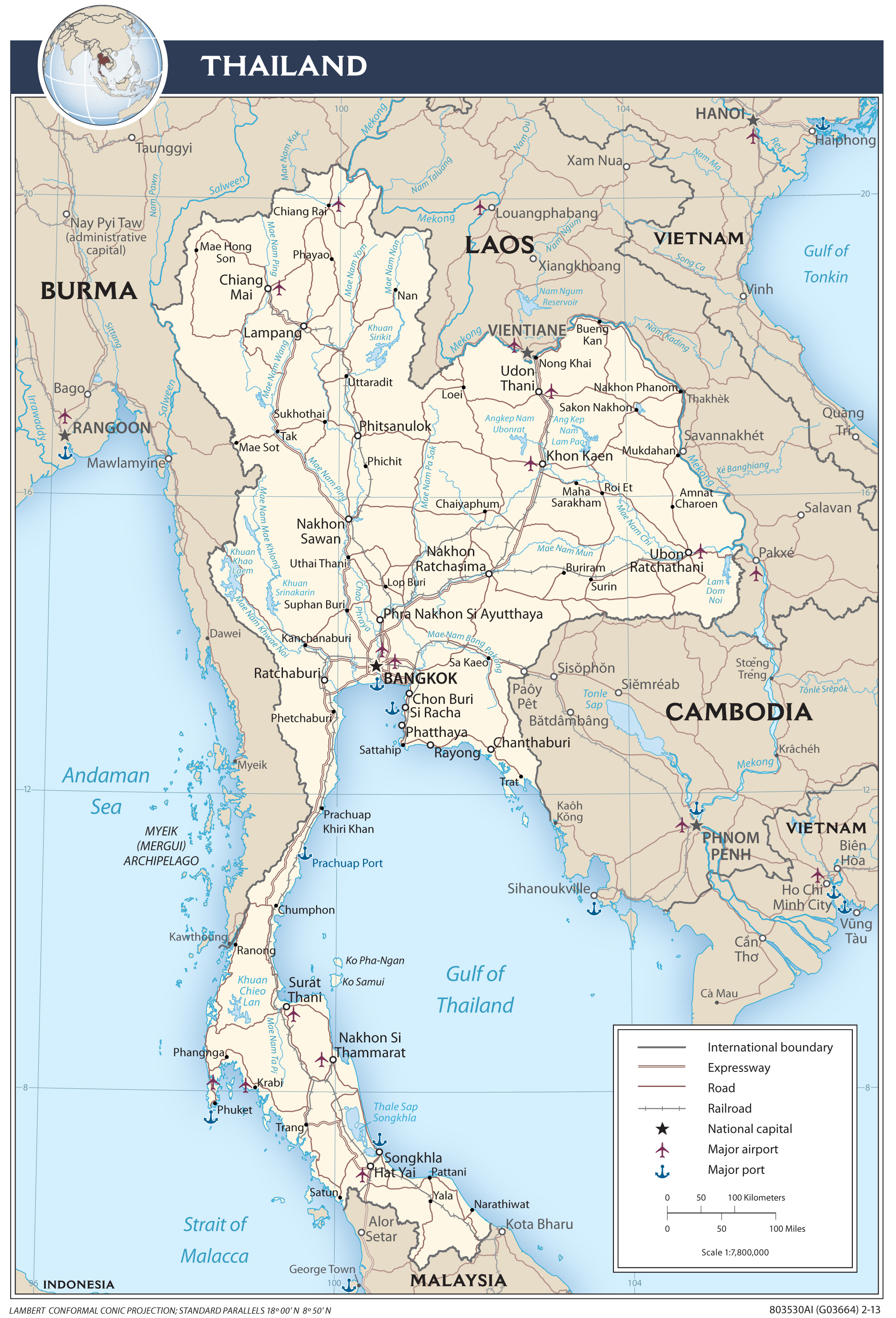
In Bangkok, people usually speak Standard Thai or Bangkok-style Central Thai. In the north, many locals also use Northern Thai. In the northeast, you will hear Isan, which is closely related to Lao. In the south, Southern Thai can sound fast, strong, and very different from Bangkok Thai.
That is why the language you hear in Thailand is not just a matter of grammar. It is a travel question, a culture question, and a daily-life question.
What Travelers Need to Know
For most travelers and learners, Standard Thai is the main language to learn first. Regional speech adds local flavor and identity. English can help in tourist areas, but it is not something you should depend on everywhere. A few Thai phrases, spoken politely, can make daily interactions much smoother.
Standard Thai: The Language Most Learners Should Start With
Standard Thai is often called Central Thai. It is the form of Thai you hear on national TV, in formal situations, in schools, and in most beginner learning materials.
In Thai, the language is called ภาษาไทย (phaa-sǎa Thai). Chinese-speaking learners may know it as 泰语. Older English sources sometimes use “Siamese language,” but today “Thai” is the normal term.
Standard Thai is tonal, which means pitch changes meaning. This is one reason Thai pronunciation can feel challenging at first. A word can sound similar to your ear but mean something completely different if the tone changes.
Do not let that scare you. For travel, you do not need perfect pronunciation from day one. You need clear, simple phrases, a polite tone, and the confidence to try.
Thailand’s Main Regional Dialects and Spoken Languages
Thailand’s regional speech is often grouped into four broad areas: Central Thai, Northern Thai, Northeastern Thai or Isan, and Southern Thai. These are not just small accent changes. They can differ in rhythm, vocabulary, sentence endings, tones, and cultural feeling.
Central Thai: Bangkok and the National Standard

Central Thai is the foundation of Standard Thai. If you are learning Thai for travel, business, or everyday communication, this is the variety you should focus on first.
For travelers, the language you hear in Bangkok malls, hotels, BTS stations, restaurants, and national media is usually Standard Thai with Bangkok pronunciation. That makes Bangkok one of the easiest places for learners to practice because the Thai you hear often matches what you study.
At the same time, Bangkok is extremely multilingual. The language in Bangkok is mainly Thai, but you may also hear English, Chinese, Japanese, Korean, Burmese, Khmer, Arabic, Hindi, Russian, and many other languages depending on the neighborhood.
In tourist areas, English is common. In local markets, taxis, clinics, small restaurants, and government offices, basic Thai becomes much more useful.
Northern Thai: Chiang Mai, Chiang Rai, and Lanna Culture
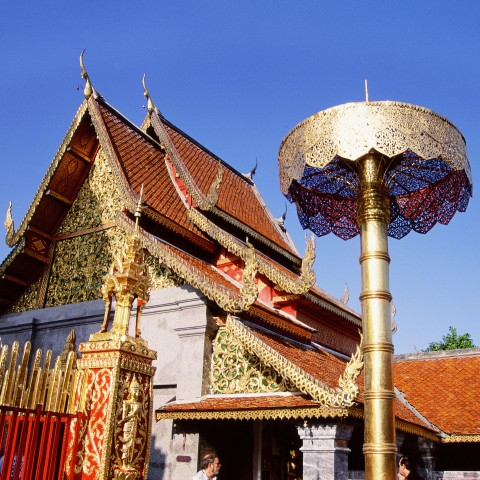
In northern Thailand, especially around Chiang Mai, Chiang Rai, Lampang, and Lamphun, many people speak Northern Thai. Locally, it is often called คำเมือง (kham mueang).
If you study Standard Thai and then visit Chiang Mai, you may notice that local people sound softer or use words you do not recognize. That does not mean your Thai is wrong. It means you are hearing a regional language with its own history and identity.
Northern Thai is strongly connected to Lanna culture, temples, local festivals, music, and family life. Travelers can usually use Standard Thai without problems, but recognizing Northern Thai as a real local language helps you understand the region more respectfully.
One small feature you may hear in the north is เจ้า (jâo), a polite local particle often used to soften speech, especially by women. It gives conversation a warm northern feeling.
Isan: Northeastern Thai and the Lao Connection
The northeast of Thailand is commonly called Isan or Isaan. You may see Isan spelled in different ways in English, including Isan, Isaan, and Esan.
The Isan language is closely related to Lao. Many people in northeastern Thailand grow up using Isan at home or with friends and Standard Thai in school, work, media, and formal situations.
You are likely to hear Isan in places such as Khon Kaen, Udon Thani, Ubon Ratchathani, Roi Et, Sakon Nakhon, Nakhon Phanom, and many rural northeastern communities. You will also hear Isan in Bangkok because many people from the northeast live and work there.
For travelers, Isan is especially connected to food, music, humor, and local warmth. If you love dishes like som tam, larb, grilled chicken, and sticky rice, you are already enjoying part of Isan culture.
A famous Isan word is:
แซ่บ (sâaep) — delicious, tasty, often with a spicy or bold flavor
In Standard Thai, “delicious” is usually อร่อย (à-ròi). In Isan food culture, แซ่บ carries extra feeling.
Southern Thai: Fast, Direct, and Regionally Proud

Southern Thai is spoken across much of southern Thailand. To learners who are used to Bangkok Thai, it can sound fast, strong, and difficult to follow at first.
You may hear Southern Thai in provinces such as Nakhon Si Thammarat, Surat Thani, Trang, Phatthalung, Songkhla, and parts of the island and coastal regions.
Southern Thai is closely tied to regional pride. It appears in local jokes, family conversations, markets, songs, and everyday community life.
In the far south, especially near Malaysia, you may also hear Malay varieties. In some communities, Malay is part of daily life, religion, family identity, and local education. This is one reason southern Thailand can feel linguistically different from Bangkok or Chiang Mai.
Other Languages Spoken in Thailand
Thai is the main national language, but it is not the only language used in Thailand.
Depending on where you go, you may hear:
- Malay varieties in the far south
- Khmer near the Cambodian border
- Burmese in migrant communities and border areas
- Karen languages in western and mountain regions
- Hmong, Akha, Lisu, and other languages in northern highland communities
- Chinese varieties in families, business communities, and cultural neighborhoods
- English in tourism, hospitality, education, and international business
For travelers, the main lesson is simple: learn Standard Thai first, but do not assume everyone’s home language is the same.
Common Words Across Thai Dialects: Quick Comparison
For learners, the goal is not to replace Standard Thai with dialect. The goal is to recognize local words when you hear them, especially in food markets, taxis, family restaurants, songs, and casual conversation. Standard Thai will still help you almost everywhere, but these regional words make the real sound of Thailand much easier to understand.
| English Meaning | Standard / Central Thai | Northern Thai / Kham Mueang | Isan / Northeastern Thai | Southern Thai | Traveler Note |
| Delicious | อร่อย (à-ròi) | ลำ (lam) | แซ่บ (sâaep) | หรอย / หร่อย (rǒi / ròi) | Very useful for food. In Isan food culture, แซ่บ feels stronger and more local than basic “delicious.” |
| Very / a lot | มาก (mâak) | นัก (nák) | หลาย / คัก (lǎai / khák) | จังหู้ (jang-hûu) | You may hear this after adjectives, like “very good” or “very delicious.” |
| What? | อะไร (à-rai) | อะหยัง (à-yǎng) | อีหยัง (ii-yǎng) | พรือ / ไหร (phruue / rǎi) | If you hear หยัง or พรือ, someone may be asking “what?” or “what/how?” depending on context. |
| Where? | ที่ไหน / ไหน (thîi-nǎi / nǎi) | ตี๊ไหน / ตี้ไหน (dtíi-nǎi / dtîi-nǎi) | ไส (sǎi) | หนไหน (hǒn-nǎi) | In Isan, ไปไส means “Where are you going?” and can also work like a casual greeting. |
| To speak / talk | พูด (phûut) | อู้ (ûu) | เว้า (wâo) | แหลง (lǎeng) | In Chiang Mai, อู้กำเมือง means “speak Northern Thai.” |
| Yes/no question marker | ไหม (mǎi) | กา / ก่อ (gaa / gàaw) | บ่ / บ๊อ (bàw / báw) | ม่าย (mâai) | These appear at the end of questions. For example, “delicious?” may sound very different by region. |
| No / not | ไม่ (mâi) | บ่ / หมะ (bàw / mà) | บ่ (bàw) | ม่าย / ไม่ (mâai / mâi) | For travel, Standard Thai ไม่ is safest. You may still hear บ่ often in the north and northeast. |
| To look / see | ดู (duu) | ผ่อ (phàaw) | เบิ่ง (bòeng) | แล (lae) | Useful when someone points something out or tells you to look. |
| Market | ตลาด (dtà-làat) | กาด (gàat) | ตลาด (dtà-làat) | หลาด (làat) | In Chiang Mai, names like กาดหลวง refer to markets. Southern Thai may shorten or shift the sound. |
| Love | รัก (rák) | ฮัก (hák) | ฮัก (hák) | รัก (rák) | ฮัก is easy to recognize in Northern Thai and Isan songs, signs, and casual speech. |
Important note: Regional Thai words are not always written in one fixed way, especially when people are writing spoken dialects in Thai script.
Essential Vocabulary: Thai Words for Language and Travel
Here are high-frequency words and phrases that help you talk about language in Thailand.
- ภาษาไทย (phaa-sǎa Thai) — Thai language
- ภาษากลาง (phaa-sǎa glaang) — Central Thai / Standard Thai
- ภาษาอีสาน (phaa-sǎa ii-sǎan) — Isan / Northeastern Thai
- ภาษาเหนือ (phaa-sǎa nǔuea) — Northern Thai
- ภาษาใต้ (phaa-sǎa dtâi) — Southern Thai
- ภาษาอังกฤษ (phaa-sǎa ang-grìt) — English
- พูด (phûut) — to speak
- เข้าใจ (khâo-jai) — to understand
- สำเนียง (sǎm-niiang) — accent
- นิดหน่อย (nít-nòi) — a little
Useful Phrases You Can Actually Use

Use ครับ (khráp) if you want a masculine polite ending. Use คะ (khá) for feminine polite questions and ค่ะ (khâ) for feminine polite statements.
1. Can you speak English?
พูดภาษาอังกฤษได้ไหมครับ/คะ
phûut phaa-sǎa ang-grìt dâi mǎi khráp/khá?
2. I speak a little Thai.
ผม/ฉันพูดภาษาไทยได้นิดหน่อยครับ/ค่ะ
phǒm/chǎn phûut phaa-sǎa Thai dâi nít-nòi khráp/khâ
3. Could you speak slowly?
พูดช้า ๆ ได้ไหมครับ/คะ
phûut cháa-cháa dâi mǎi khráp/khá?
4. How do you say this in Thai?
คำนี้ภาษาไทยพูดว่าอะไรครับ/คะ
kham níi phaa-sǎa Thai phûut wâa à-rai khráp/khá?
5. What language do people speak here?
ที่นี่พูดภาษาอะไรครับ/คะ
thîi-nîi phûut phaa-sǎa à-rai khráp/khá?
Conclusion: Connecting Through Language
Thailand’s main language for learners is Standard Thai. It is the most practical choice for travel, daily communication, signs, transport, food, and beginner study.
But the real sound of Thailand includes much more: Northern Thai, Isan, Southern Thai, Malay varieties, Chinese varieties, Burmese, Khmer, Karen languages, Hmong, Akha, Lisu, English, and many others.
Start by learning Standard Thai, but embrace regional dialects with respect. Using polite particles and a friendly smile will help you connect with locals far beyond the standard tourist script.
Ready to move from survival phrases to real conversations? Build your listening, vocabulary, and speaking confidence with step-by-step Thai lessons at ThaiPod101.com.